



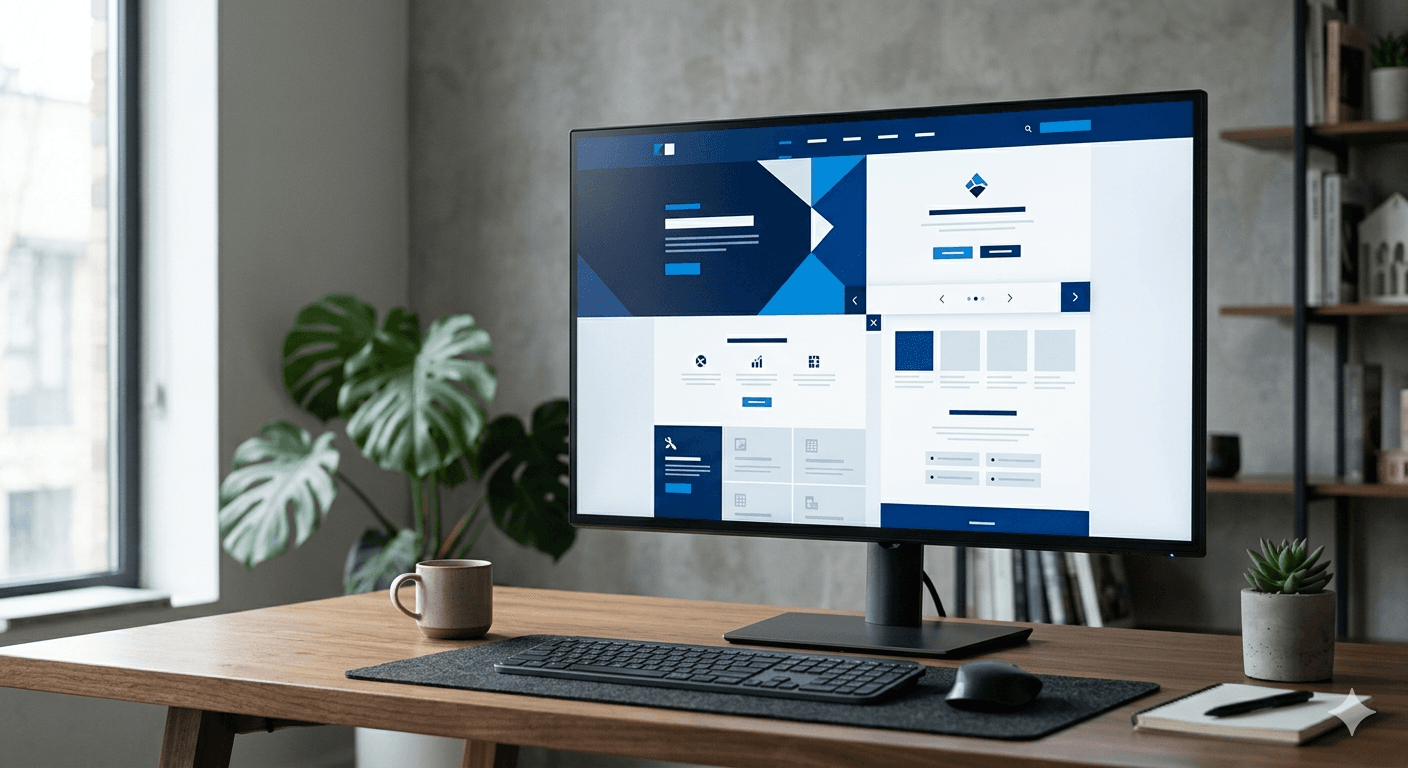
Web Redesign
You don't always have to rebuild everything from scratch. Before I propose a redesign, I check what's working on your current site, what isn't, and what's worth keeping — including your Google rankings.
A redesign doesn't mean losing your content, your SEO, or the work you've already put in. I check first what's worth keeping, and what actually needs to change — I don't rebuild for the sake of rebuilding.
Your site gets traffic, but very little of it turns into inquiries or sales.
It was designed years ago and no longer reflects what your business looks like or offers today.
It looks or works poorly on mobile, even if it seems fine on desktop.
You don't know how to update it, or it depends on someone who's no longer around.
It loads slowly, and you suspect that's costing you traffic and rankings.
Before you redesign
Redesigning doesn't always mean tearing down your current site and starting over. Sometimes the problem is structure, user experience, or performance — not the code — and it can be fixed without losing what you've already built.
It doesn't always mean switching technology: sometimes the same WordPress site or framework, properly restructured, solves the problem.
It doesn't erase your content or your SEO history: a well-done migration preserves URLs, redirects what's needed, and protects your rankings.
It's not just a visual refresh: it includes reviewing structure, speed, and user experience, not just colors and fonts.
It is the chance to fix technical or design decisions that no longer serve your business.
Recognize the symptom to understand what's behind it:
Almost always unoptimized images or code piled up from unnecessary plugins.
The design was adapted afterward instead of being built mobile-first from the start.
It has no admin panel built for you, or it depends on whoever built it.
Technical changes, duplicate content, or lost speed erode your rankings over time.
The design hasn't changed in years, even though your business has.
The scope depends on how deep the changes need to go. Here's what I typically assess and rebuild:
Initial audit
I review what's working, what isn't, and why before proposing changes.
Real responsive design
Tested on real devices, not just simulated in the browser.
SEO migration
Redirects and structure that protect your current rankings.
Performance
I fix what's making your site slow, not just what looks off.
Admin panel
If you couldn't edit your site before, now you can.
Clean code
Without dragging along the old site's technical debt.
How I decide
Not every redesign requires starting over. Here's the real difference between the two paths.
| Criteria | Redesign on the existing site | Rebuild from scratch |
|---|---|---|
| When it applies | The problem is design, UX, or performance, not the technical foundation | The current platform can no longer support what your business needs |
| SEO and content | Preserved almost entirely | Requires a careful migration to avoid losing rankings |
| Time | Usually faster | Takes longer, similar to a new build |
| Cost | Generally lower | Higher, comparable to a new development project |
| When it's NOT the right fit | When the current platform can no longer support what you need | When the current site works fine and just needs small adjustments |
When it applies
The problem is design, UX, or performance, not the technical foundation
SEO and content
Preserved almost entirely
Time
Usually faster
Cost
Generally lower
When it's NOT the right fit
When the current platform can no longer support what you need
When it applies
The current platform can no longer support what your business needs
SEO and content
Requires a careful migration to avoid losing rankings
Time
Takes longer, similar to a new build
Cost
Higher, comparable to a new development project
When it's NOT the right fit
When the current site works fine and just needs small adjustments
The right call depends on how solid your current site's foundation is, not a general preference.
How I handle redesigns
Every redesign starts with a real audit of your current site, not a generic proposal.
I review your current site: what works, what doesn't, and why.
We define what stays and what changes.
I redesign the structure and user experience.
I move the content while protecting your current SEO.
I check performance before launch.
The site goes live, already verified.

Miguel Prot
Founder & Developer — Hamaca Web Solutions
I work directly on every redesign, without outsourcing. I've migrated and renewed sites across different platforms without losing rankings or content, working between Mexico and the U.S.
Learn more about my backgroundA redesign's price varies more than a new build's, because it depends on how much of your current site can be kept. Here's what actually drives it:
How solid the current foundation is
A well-structured site costs less to redesign than one that needs rebuilding underneath.
Content volume to migrate
Migrating ten pages isn't the same as migrating hundreds, especially if each one's SEO needs care.
Platform change
Switching technology (say, from WordPress to Next.js) adds migration work.
Redesign scope
A UX and speed tune-up costs differently than a full visual identity redesign.
Existing integrations
Keeping or migrating integrations (payments, booking, CRMs) adds testing time.
These are the mistakes that end up costing a business the most during a redesign.
Redesigning without reviewing existing SEO: Losing rankings by not redirecting URLs is one of the most common and costly mistakes.
Changing everything at once without a reason: Not everything you dislike needs to be rebuilt — sometimes it just needs adjusting.
Not backing up the current site: Without a backup, there's no way to recover content or settings if something goes wrong.
Choosing a new platform without a technical reason: Switching technology because it's trendy adds cost and risk without necessarily solving the real problem.
Not testing on real devices before launch: What looks good on a desktop computer doesn't always work the same way on mobile.
A few examples of projects built to solve specific problems for different businesses.
Not if it's done right. I migrate content with careful redirects and structure to protect the SEO you already have.
It gets reviewed and kept wherever it's still useful. It isn't discarded by default just because the site is being redesigned.
It depends on scope: a design and UX tune-up can take a few weeks; a full redesign with a platform migration is closer to the timeline of a new build.
It depends on how much of your current site is kept and how large it is. More detail in the pricing section of this same page.
Yes, it's a common call to make during a redesign. It's evaluated based on where your site needs to go, not just the current platform.
Not necessarily. In most cases the same domain is kept; hosting is evaluated based on the new platform.
It includes technical SEO during the migration: speed, structure, and redirects. A broader content strategy is a separate service.
That works. A redesign's scope doesn't have to be all or nothing — it's adjusted to what actually needs to change.
Yes. The redesign is built separately and published once it's tested, so your current site isn't interrupted.
They're reviewed during the initial audit and migrated or replaced depending on whether they're still the best option.
Yes. You get access to the code, hosting, and domain, same as with a new build.
I check that everything works in production during the first days. Ongoing maintenance after that is optional, not required.
Share your current site and I'll give you an honest diagnosis: what's worth keeping, what needs to change, and how we'd do it without losing what you've already built.
No obligation, straight answers.